Barge transportation is one of the most critical components of the U.S. logistics system. Every year, America’s inland waterways move hundreds of millions of tons of cargo that keep refineries operating, farms competitive, and manufacturers supplied. From grain and fertilizer to petroleum products and chemicals, barges form the backbone of bulk and breakbulk transportation across the country.
Yet despite its scale and importance, barge transportation remains largely misunderstood outside the industry. Its terminology, commercial models, and operational rhythms differ significantly from trucking, rail, or ocean shipping. For shippers, carriers, and newcomers alike, understanding how inland barge transportation works is essential. This Barge 101 guide offers a practical, plain language introduction to the U.S. inland system while reflecting how the industry operates today.
What Is a Barge? Tugboats vs. Towboats
At its most basic level, a barge is a flat bottomed vessel designed to carry cargo but not equipped with its own propulsion. Unlike trucks or railcars, barges cannot move independently; they rely entirely on another vessel for movement.
That reliance introduces an important distinction within the marine industry. Tugboats and towboats serve similar purposes but operate in different environments. Tugboats typically work in coastal or ocean‑going, or “blue water,” settings. These vessels usually pull barges behind them and are common along U.S. coastlines and in non‑contiguous markets like Alaska, Hawaii, and Puerto Rico.
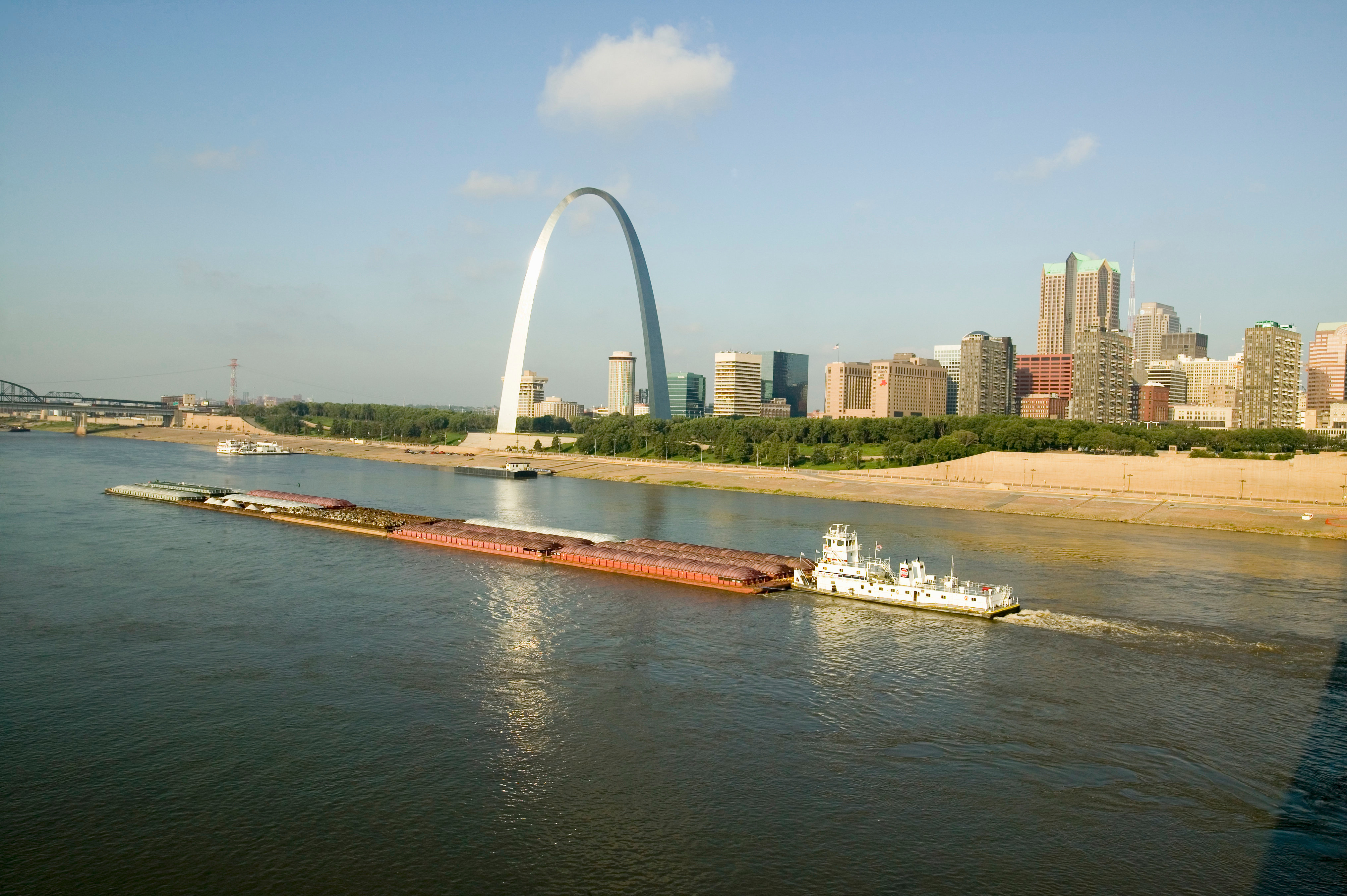
Inland waterways, however, are dominated by towboats. Rather than pulling barges, towboats push them from behind, assembling multiple barges into a single unit known as a tow. On major river systems like the Lower Mississippi, a single towboat may push dozens of barges at once. Within the industry, this distinction is more than semantics. From Louisiana through the Midwest, professionals expect to hear “towboat,” while “tugboat” remains the standard term along the coasts.
The U.S. Inland Waterways System
Understanding barges also requires understanding the system that supports them. The United States operates one of the largest and most efficient inland waterway networks in the world, encompassing roughly 24,000 miles of navigable rivers, canals, and channels. Approximately half of that network is actively used for commercial shipping.
This system includes major corridors such as the Mississippi River and its tributaries, the Ohio River, the Illinois River, and the Tennessee and Cumberland Rivers. Navigation across these waterways is made possible by more than 250 locks and dams operated by the U.S. Army Corps of Engineers. Much like the Panama Canal, locks raise or lower vessels to accommodate changes in river elevation, enabling consistent movement across varied terrain.
The commodities that move through this network reflect its role as a critical component of the U.S. economy. Grain represents a significant share of barge traffic, with roughly 70 percent of U.S. grain exports moving by barge at some point in their journey. Petroleum products, chemicals, fertilizer, coal, aggregates, and other bulk materials also depend heavily on inland waterways for efficient transportation.
How Barges Operate
Within this vast system, efficiency is achieved through scale. Inland barges rarely move alone. Instead, towboats assemble them into configurations designed to maximize cargo volume while accounting for river conditions, lock dimensions, and safety requirements.
On smaller rivers, a tow may consist of only a few barges. On the Lower Mississippi, however, a single tow can represent the equivalent of thousands of truckloads moving together. This ability to move enormous volumes of cargo in a single movement is what makes barge transportation uniquely cost effective.
That efficiency translates directly into economic and environmental benefits. On a per ton mile basis, barges are significantly less expensive than trucking and dramatically more fuel efficient. They move the same cargo using a fraction of the fuel and generate far fewer emissions, making inland waterways an increasingly important part of sustainable supply chains.
At the same time, scale introduces complexity. Locks can become bottlenecks, particularly when large tows must be broken apart and reassembled to pass through smaller chambers. Routing decisions, like whether to wait at a congested lock or take a longer but more reliable path, can meaningfully affect transit time and total cost.
Key Barge Industry Terms and Players
Behind every barge movement is a network of specialized participants whose coordination determines success or delay. At the center is the shipper, sometimes called the charterer, who owns the cargo and pays for its transportation. The carrier or operator provides the barges, towboats, or both, and may own all of the assets involved or only a portion of the movement.
Cargo is loaded and unloaded at terminals, which are privately operated facilities often confused with ports. While ports function more like infrastructure authorities or landlords, terminals handle the physical movement of cargo. Surveyors and inspectors verify quantity and quality at key points in the process, ensuring contractual requirements are met.
Additional roles come into play depending on cargo type. Tankermen manage hose connections and product transfer for liquid cargoes, while stevedores handle cranes and material movement for dry and project cargo. Brokers may also be involved, leveraging long‑standing relationships to secure capacity or manage timing in a tight market. Each role adds another layer of coordination, and another opportunity for inefficiency if information is incomplete or delayed.
Types of Barges and Cargo
The diversity of cargo moving on inland waterways has driven an equally diverse range of barge designs. Broadly speaking, inland barge cargo falls into two categories: bulk and breakbulk. Bulk cargo includes commodities moved in large volumes without individual units materials like grain, coal, aggregates, and petroleum products. Breakbulk cargo consists of discrete, countable items like steel coils, machinery, or oversized project components.
Different barge types are optimized for these cargoes. Hopper barges are commonly used for dry bulk, while covered hopper barges protect moisture sensitive products like grain. Liquid tank barges transport petroleum products, chemicals, and refined fuels, with some equipped with heating systems for cargoes such as asphalt. Deck barges support project cargo and oversized equipment.
In some cases, barges also function as floating storage, allowing shippers to manage inventory when onshore storage or processing capacity is limited. This flexibility is one of the inland system’s less visible advantages.
Commercial Models and Cost Factors
How a barge moves is only part of the equation; how it is contracted and priced matters just as much. Most inland barge movements fall into one of two commercial models: dedicated service or line haul service.
Dedicated service is best compared to hiring a rideshare vehicle. A specific towboat and set of barges are assigned to move cargo directly from origin to destination. This model prioritizes speed and simplicity but comes at a higher cost, typically structured around daily charter rates.
Line haul service, by contrast, operates more like a bus route. Barges move through established corridors and may stop at fleet locations to wait for or transfer to another towboat. While this approach is more cost effective, it is slower and often provides less real‑time visibility.
Several additional cost concepts shape the true economics of a shipment. Barge-only time occurs when barges remain at a terminal while a towboat is reassigned, reducing costs if properly tracked. Demurrage applies when loading or unloading exceeds contractual free time. Late hand dates define the windows during which cargo must be ready to avoid penalties. Together, these factors can materially influence final transportation costs.
Challenges and Opportunities in Barge Transportation
Despite its advantages, inland barge transportation is not without challenges. Terminal congestion, lock delays, weather disruptions, and fluctuating river conditions can all affect schedules. Historically, many of these variables have been managed through phone calls, emails, and spreadsheets, relying heavily on institutional knowledge.
This manual approach limits visibility and makes proactive decision making difficult. Yet it also highlights where the greatest opportunities lie. Better data, improved coordination, and real‑time insight can reduce delays, minimize demurrage exposure, and unlock meaningful efficiency gains across the supply chain.
The Future of Inland Waterways
As the industry evolves, inland waterways and the barge industry at large are entering a period of meaningful digital transformation. Real‑time asset tracking, AI‑driven optimization, and digital twins are giving shippers and operators new ways to understand costs, predict disruptions, and improve planning.
OpenTug is helping lead this shift by bringing transparency and intelligence to a historically opaque industry. By combining operational data with advanced analytics, OpenTug enables customers to validate invoices, optimize asset utilization, and move cargo more reliably and at lower cost.
Conclusion
Barge transportation may operate predominately on most people’s periphery, but its role in the U.S. economy is difficult to overstate. For those new to the industry, understanding the fundamentals provides a foundation for better decisions and stronger outcomes.
As inland logistics continue to modernize, those who pair operational knowledge with better data and technology will be best positioned to capture value. To continue learning, explore OpenTug’s additional resources or connect with the team to see how modern tools can unlock new performance across your inland logistics network.

.png)