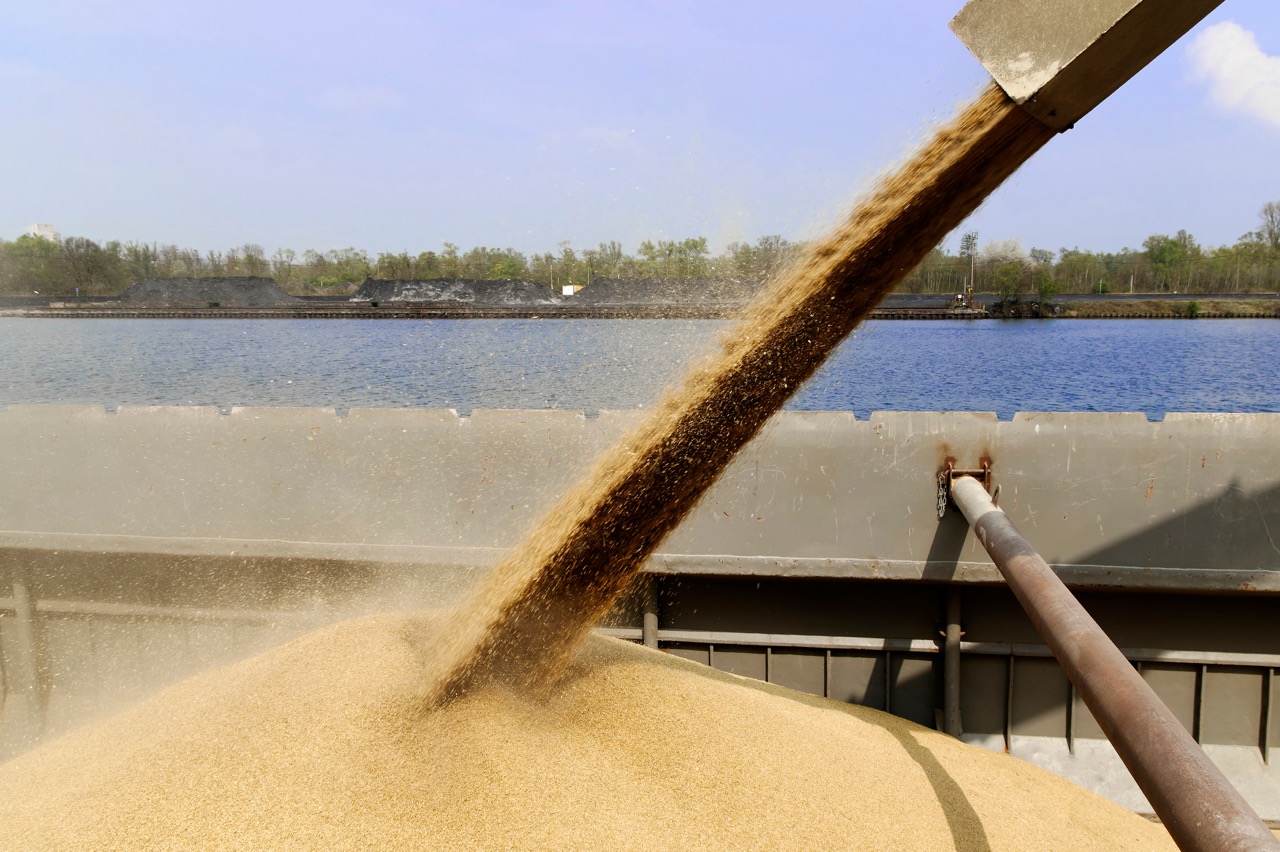
The agricultural supply chain is shaped by factors far beyond the farm. But as 2026 continues to unfold, those forces feel especially interconnected and harder to ignore. Trade policy shifts ripple through export markets. Climate volatility tests the reliability of inland waterways. Infrastructure decisions made years ago are now determining today’s capacity constraints. And digital tools are rapidly redefining how agricultural freight is planned, tracked, and executed.
For grain, soybean, and fertilizer markets in particular, these dynamics are converging at a critical moment. Demand remains strong, but expectations around cost, sustainability, and reliability are more demanding than ever. As shippers and logistics providers look ahead, several defining factors stand out as likely to shape agricultural supply chains both this year and beyond.
Trade Policy and Its Impact on Agricultural Freight Movement
Few variables influence agricultural logistics as quickly, or as unpredictably, as trade policy. Tariffs, trade negotiations, and geopolitical relationships all affect where U.S. crops move and how competitive they are once they reach global markets. Even modest changes in policy can shift demand across regions, influencing which ports are utilized, how much volume moves inland, and which transportation modes make the most economic sense.
Recent analysis shows how tariffs directly impact agricultural profitability and transportation costs, particularly for export-oriented commodities like grain and soybeans. Concurrently, USDA export data continues to underscore the sensitivity of bulk agricultural flows to global demand shifts and trade relationships.
For exporters navigating tighter margins and heightened uncertainty, inland waterways are a key player in maintaining cost efficiency. When compared to other modes of transport, barge transportation’s ability to move high volumes at lower per-unit costs helps preserve competitiveness when policy changes squeeze already thin margins.
Infrastructure Investment’s Growing Role in Supply Chain Performance
Infrastructure is often invisible when it works, yet impossible to ignore when it doesn’t. Aging locks, dams, and port facilities across the inland waterway system continue to influence transit times, reliability, and overall supply chain performance. While recent federal and state funding has brought renewed attention to infrastructure modernization, progress remains uneven.
The American Farm Bureau Federation, as well as the USDA, have both repeatedly highlighted the importance of inland waterways to U.S. agricultural exports and the economic risks posed by delayed infrastructure upgrades, like bottlenecks that drive up costs, reduce productivity, and ultimately slow GDP growth. Meanwhile, the U.S. Army Corps of Engineers continues to document capacity constraints and maintenance challenges across key navigation corridors.
In today’s market, infrastructure can no longer be described as just a public policy issue. Agricultural supply chains that depend on reliable barge service are increasingly shaped by where investments are accelerating and where vulnerabilities remain.
The Growing Role of Digital Tools in Agricultural Logistics
As physical infrastructure faces growing pressure, integrated digital infrastructure is stepping in to close visibility gaps. Across the agricultural supply chain, real-time data and predictive analytics are reshaping how freight is managed. Shippers want clearer insight into where their cargo is, how disruptions might cascade, and what alternatives exist when conditions change.
Industry events and analysis highlight how digital tools like AI-driven forecasting and logistics optimization are becoming critical to modern ag supply chains. These themes are increasingly reflected in fertilizer industry discussions as well, including programming tied to The Fertilizer Institute’s Annual Business Conference.
For inland barge transportation, digital platforms are helping modernize a historically fragmented market, improving coordination, scheduling, and decision-making across shippers, carriers, and terminals.
Climate Volatility Tests the Reliability of Inland Waterways
Climate change, once a long-term concern, has shifted to an immediate operational reality for agricultural logistics. Fluctuating river levels, prolonged droughts, and extreme weather events are disrupting barge movements with increasing frequency. Low water conditions can restrict draft levels, reduce barge loads, and compress shipping windows during critical harvest and fertilizer application seasons.
Low water levels on the Mississippi River and its tributaries have also driven up grain transportation costs and strained supply chain reliability. And broader climate monitoring from NOAA reinforces that these disruptions are not anomalies but part of a growing pattern of hydrologic variability.
As a result, resilience increasingly depends on proactive planning, like incorporating better forecasting, flexible scheduling, and improved coordination across transportation partners.
Sustainability Shapes Transportation Decisions
Sustainability is one of the more recent considerations on the scene to influence how agricultural supply chains are designed and evaluated. Buyers, regulators, and investors are placing greater emphasis on emissions, fuel efficiency, and environmental impact, and transportation mode choices play a significant role in that equation.
Data continues to show that barge transport moves freight with fewer emissions per ton-mile than truck or rail, reinforcing its role as one of the most fuel-efficient freight modes available. Environmental reporting frameworks and emissions guidance from the EPA further elevate transportation efficiency as a measurable component of sustainability strategies.
As sustainability reporting ideally becomes more standardized these advantages are becoming more visible and increasingly valuable across grain and fertilizer supply chains.
Looking Ahead
The modern agricultural supply chain is defined less by any single disruption and more by the interaction of many. Trade policy, infrastructure investment, climate volatility, digital transformation, and sustainability pressures are collectively reshaping how grain, soybeans, and fertilizer move from origin to market.
As these forces continue to evolve, visibility and adaptability will matter just as much as capacity. For many shippers, that means rethinking how inland waterway transportation is planned, coordinated, and executed, and exploring tools designed specifically for barge logistics that bring clarity to an increasingly complex supply chain. To get a sense for how we’re tackling these obstacles head on, visit our website or connect with us for a product demo.

.png)